Pinhole Leaks · Hard Water · Copper Pipe
Pinhole Leak Detection & Repair in El Monte & Pasadena, CA
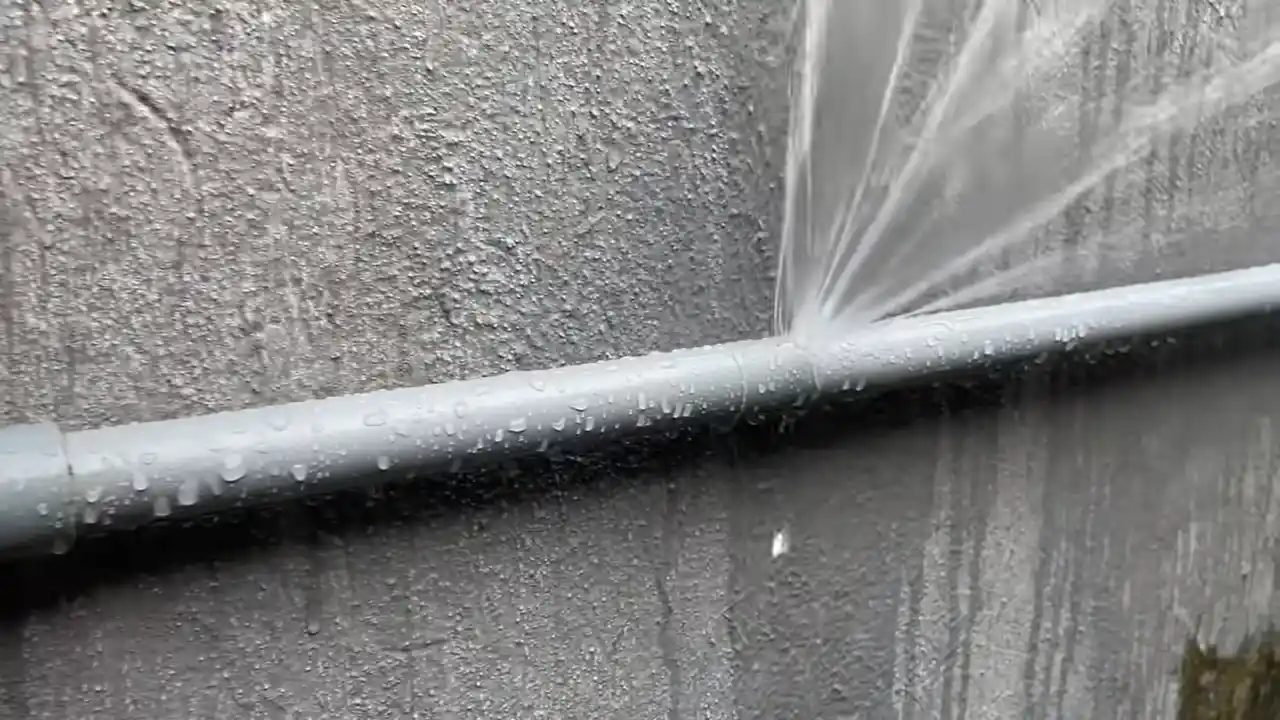
Ten to seventeen grains per gallon. That is the hardness of the groundwater serving this city, and it has flowed through the same copper pipes for sixty to eighty years in much of El Monte. The result is the pinhole leak: a pit that finally breaks through and weeps into your walls.
What Decades of Hard Water Do to Copper
El Monte is unusual in the valley for running its own municipal water system. City wells draw from the Main San Gabriel Basin, San Gabriel Valley Water Company operates from its Garvey Avenue headquarters here, and California American Water adds Raymond Basin supply to parts of town. Every source is treated, tested, and safe to drink. Every source is also mineral-heavy.
Inside a copper line, that mineral load does two things over decades. Scale builds on the pipe wall unevenly, and beneath the scale, pitting corrosion drills tiny craters into the metal. One crater eventually wins. The leak it makes is often smaller than a pencil tip, which is exactly why it can run for months behind drywall before anyone notices the stain, the smell, or the bill.
Finding a Weep the Size of a Pin
Small leaks demand sensitive tools. Thermal imaging reads the cool or warm signature of wet material through drywall without touching it, which usually narrows the search to a single stud bay. Acoustic amplification then picks up the faint hiss of pressurized water escaping, and pressure isolation confirms which branch of the system is bleeding.
The difference between this process and exploratory demolition is the difference between one neat access hole and a wall in pieces. It also matters for the leaks you have not found yet: a system that has produced one pinhole often has siblings developing, and a whole-home pressure test reveals whether more are already active.
Patch, Reroute, or Repipe: The Honest Math
A first pinhole in a home with otherwise decent pipe justifies a simple repair: cut out the pitted section, solder in new copper or splice PEX, close the wall. The calculation changes with each repeat. By the second or third pinhole in a year, the system is telling you it is done. At that point replacing all the supply lines once becomes the cheaper decade.
We show you the removed pipe section every time. Seeing the pitting pattern on your own copper, wall thinned from the inside across its whole length or damaged only at one point, makes the patch-versus-repipe decision obvious rather than a leap of faith. Deeper corrosion questions about the material itself are covered under our copper pipe service.
Where the Copper Cohort Runs Deepest
The Garvey area, Magnolia, Arden, and the Mountain View tracts were plumbed in copper during the postwar boom. That generation of pipe has now carried hard water longer than almost any copper in the valley. El Monte built earlier than its neighbors, so its copper is older than theirs, and its pinhole season arrived first.
If a wall stain, a musty closet, or a mystery bill spike has you suspicious, the check is fast. Call (626) 898-6169, and a technician with thermal and acoustic gear can usually confirm or clear a pinhole the same day.
How to Spot a Pinhole Early
The early signs are small, and knowing them saves walls. Look for a faint brown or yellow ring on drywall or a ceiling, often no bigger than a coin at first. Run your hand along the wall below sink lines and feel for a cool, damp patch. Sniff closets and cabinets that share a wall with a bathroom. A musty smell in a closed space is water talking.
Sound helps too. Stand in a quiet house at night with everything off and listen near walls that carry pipe. A pinhole under pressure makes a soft, steady hiss. It is faint, but once heard it is hard to mistake.
Then check the paper trail. Pull up your last six water bills and look at the usage line, not the dollar line. A slow, steady climb with no change in habits fits a pinhole exactly. Any two of these signs together are worth a call to (626) 898-6169. A same-day scan with the thermal camera settles it without opening anything.
A pinhole never heals. It widens. Find it while the fix is still small.
✆ (626) 898-6169Pinhole Leak Questions From Hard-Water Homes
Why does my neighborhood get pinhole leaks when newer areas nearby do not?
Age of copper is the dominant factor. Pipe installed in the 1950s has simply absorbed more decades of hard-water pitting than pipe from the 1980s, so the postwar tracts fail first. Water chemistry, flow velocity, and original workmanship add variation house to house, but the era of construction predicts the risk better than anything else.
Will a water softener stop pinhole leaks?
A softener reduces the mineral load going forward, which slows further scale buildup, but it cannot reverse pitting already drilled into the pipe wall. For copper that is already weeping, softening is a supplement, not a repair. It makes the most sense installed alongside a repipe, protecting the new system from day one.
How fast should I act on a suspected pinhole?
Quickly. The leak itself wastes little water, but it soaks insulation, framing, and drywall around the clock, and mold follows within days in a closed cavity. Same-day detection is usually available inside El Monte: call (626) 898-6169 and describe the stain or smell, and dispatch will prioritize accordingly.