Copper Systems · Hard Water Country · El Monte
Copper Pipe Leak Detection & Repair in El Monte & Pasadena, CA
Copper earned its reputation honestly: it is durable, clean, and workable. But copper is not immortal, and its lifespan depends heavily on the water inside it. Hard, mineral-rich basin water shortens that lifespan, and much of El Monte’s copper has now been on that diet for over half a century.
The Chemistry Working Against Your Copper
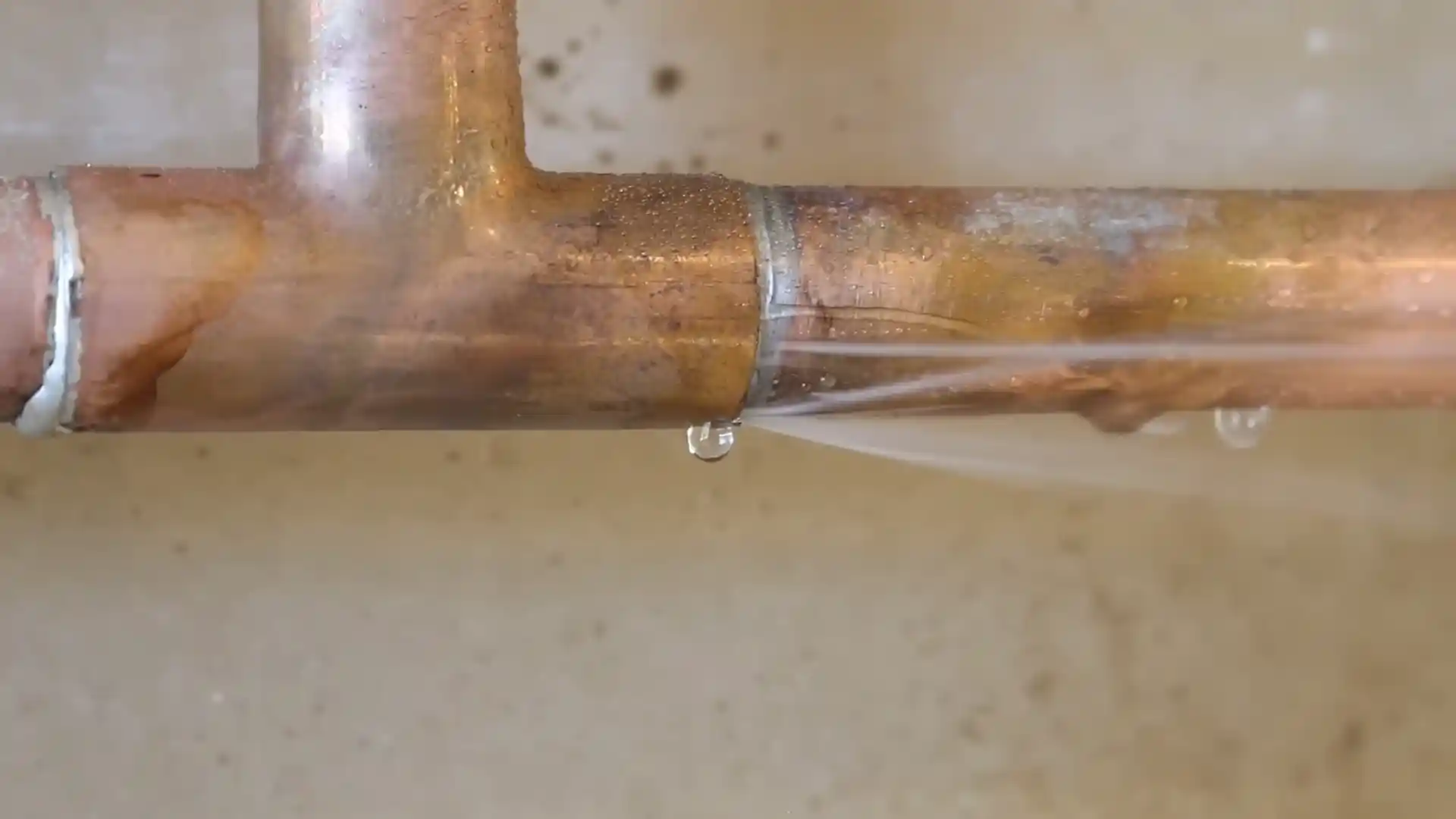
Inside a copper line, hard water attacks on two fronts. Dissolved minerals deposit as scale, and scale never coats evenly. Under and around those deposits, localized corrosion cells form and drill pits into the pipe wall while the rest of the metal stays sound. Velocity adds erosion at elbows where water turns hard corners, and stray electrical grounding through plumbing accelerates everything it touches.
The result is failure that concentrates at predictable spots: downstream of the water heater where hot water speeds the chemistry, at elbows and tees, and along horizontal runs where sediment settles. Knowing the pattern is half of finding the leak.
Not All Copper Is Equal
Wall thickness decides how long the pitting takes to win. Type M, the thin-wall grade common in postwar tract construction, has the least metal to give. Type L, thicker and typical of better or later work, buys years. During any repair we identify which grade your home carries, because the answer changes the forecast: a pit through Type L copper is a stronger system-wide warning than the same pit through Type M.
Joint quality matters too. Excess acidic flux left inside joints during original construction seeds corrosion from day one, which is why some homes leak at fitting after fitting while the straight runs stay clean. The failure pattern across your system is diagnostic, and we map it rather than treating each leak as a surprise.
Repair Choices Along the Copper Lifespan
Early in the failure curve, a spot repair is honest work: cut past the damage to bright metal, solder or press a new section in, done. Mid-curve, strategic reroutes retire the worst runs, typically the hot-side lines that fail first, while leaving sound pipe in service. Late in the curve, when pits are appearing across the system, replacing the distribution as one project stops the leak-patch-leak cycle and resets the clock entirely.
Where you sit on that curve is readable from the pipe itself. The wall thickness at the cut, the pitting density on the removed section, and the leak history of the house together give a forecast we will walk you through with the evidence in hand. The visible symptom of late-curve copper, the weeping wall stain, is covered in depth under our pinhole leak service.
Granada Park and the Mid-Life Copper Belt
Not all of El Monte's copper is at the cliff edge. Homes around Granada Park and the city's later infill carry copper decades younger than the boom-era tracts, sitting in the middle of its service life. For these homes the smart play is monitoring, not replacement: a periodic pressure test, a look at any removed sections during unrelated work, and attention to the first pinhole when it eventually comes.
That first failure is information. Handled well, it tells you the grade, the wall condition, and the realistic timeline for the rest of the system, all for the price of a small repair. Handled as a patch-and-forget, it teaches nothing and the next one arrives as another surprise. Call (626) 898-6169 when it happens and get the information along with the fix.
Living With Copper in This Water
If your copper is mid-life and sound, two habits slow the chemistry. Keep system pressure at or below about 70 psi, because pressure drives both erosion and the stress on every thinning wall; a failing regulator quietly running 100 psi ages pipe fast. And consider treatment: softening or conditioning reduces the mineral load that feeds scale and pitting going forward.
Neither habit repairs damage already done, and neither substitutes for attention once leaks begin. But together they can add real years to a system, which in repipe dollars is worth the effort. A pressure check takes minutes during any visit, so ask for one, or make it the reason you call (626) 898-6169 in the first place.
Your copper has a position on the failure curve. Find out where before it tells you.
✆ (626) 898-6169Copper System Questions From Local Homeowners
Should I replace copper with copper or switch to PEX?
Both are legitimate, and the honest answer depends on priorities. New copper in this water restarts the same clock, though modern Type L with clean workmanship runs decades. PEX is immune to the pitting chemistry, costs less installed, and routes through walls with less demolition, at the cost of different fitting considerations. We quote both on repipes so the decision is yours with real numbers.
Is green or white crust on my copper fittings a leak?
It is evidence of moisture at some point: either an active weep or past condensation. Dry crust with no moisture behind it can be historical, but crust that returns after cleaning means water is escaping slowly. Either way it marks a joint worth testing, and a quick check settles it before the drywall around it pays the price.
My home has a mix of copper and galvanized. Does that matter?
Yes, at every point they touch. Copper and steel joined without a dielectric fitting corrode each other galvanically, and those junctions become reliable failure points. Homes remodeled in stages often carry several such joints. We flag them during any copper work, and correcting them is cheap insurance. To have yours checked, call (626) 898-6169.