
Ceiling Leaks · Trace the Source · El Monte
Ceiling Leak Detection & Repair in El Monte & Pasadena, CA
A ceiling stain is a landing site, not a source. Water escaping a pipe rides framing, ducting, and the top of the drywall itself, often traveling several feet before gravity wins and the ring appears. Cutting at the stain finds wet drywall and no pipe. Tracing upstream finds the leak.
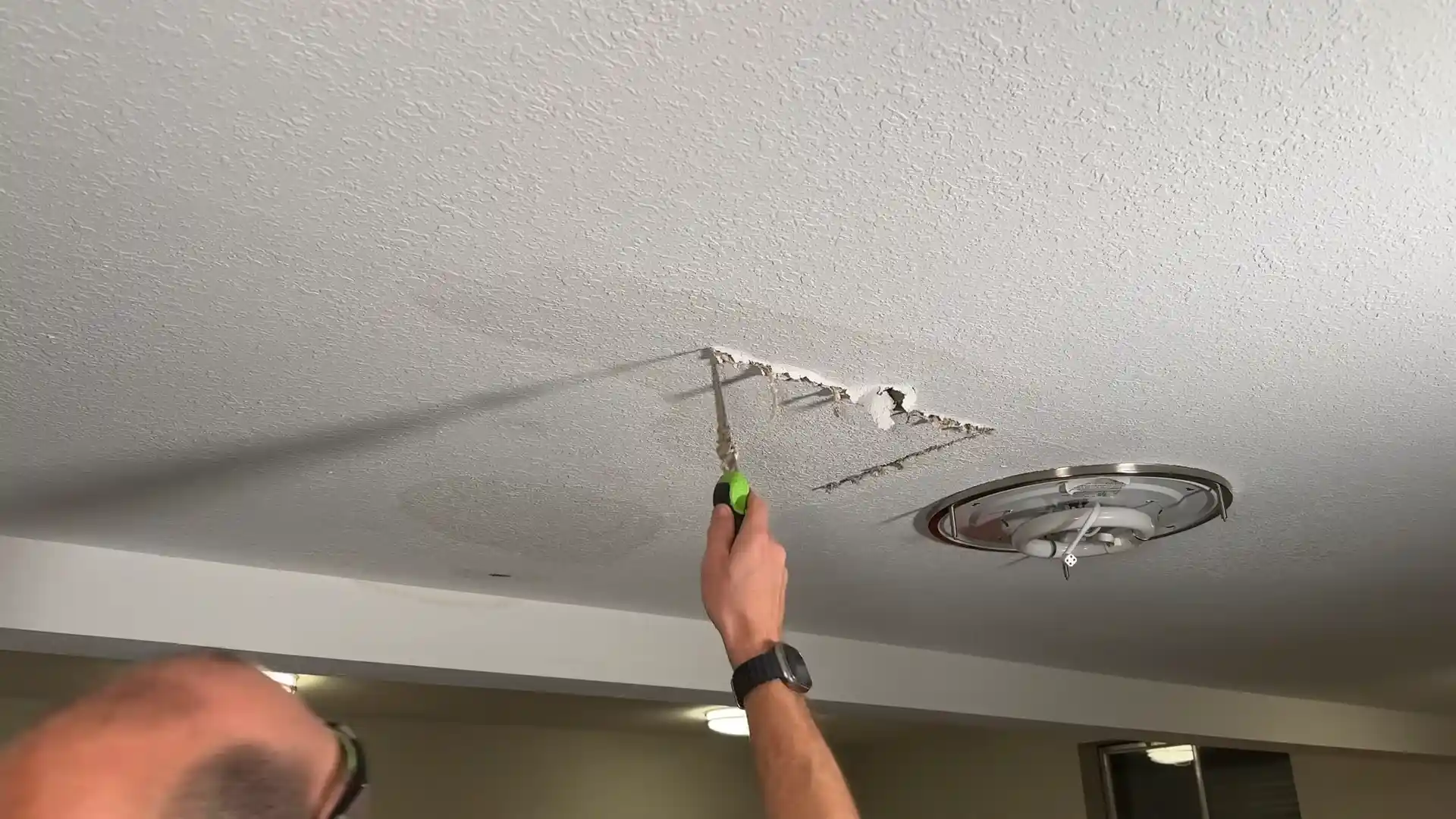
Why Water Never Drips Where It Leaks
Inside a ceiling cavity, escaping water obeys the framing before it obeys gravity. It runs along joists, follows the slight slopes of drywall seams, pools at low points, and drops only where the path ends. A leak at a fitting can stain a ceiling six feet away, and homeowners who open the stain find clean pipe and a mystery.
The fix is mapping before cutting. Thermal imaging reads the wet path as a temperature shadow across the ceiling, moisture meters confirm the wet corridor, and the trail gets followed upstream to its highest, freshest point. That point, not the stain, is where the source lives.
Naming the Water: Plumbing, Roof, or Machine
Not every ceiling stain is a pipe. Three water sources share this territory, and telling them apart early saves opening the wrong thing. Plumbing leaks track the fixture schedule: worse after showers, laundry, or dishwasher cycles. Roof leaks track the weather, appearing during and after El Monte's December-to-March rains and sleeping all summer. Air conditioning condensate tracks the heat, staining most in July when the system runs hardest and its drain pan or line clogs.
Your stain's calendar is diagnostic gold. A homeowner who can say when it grows has done half the attribution already, and the testing confirms the rest.
The Usual Upstairs Suspects
When the source is plumbing, the room above writes the shortlist. Below a bathroom, the candidates run from tub and toilet seals to the shower's hidden joints. Below a laundry, the washing machine's supply valves and drain standpipe lead the list, with aging rubber hoses as the classic sudden failure, ground covered under appliance leak service. Below an attic, a water heater or furnace drain pan may be involved, and below nothing at all, the ceiling cavity itself may carry a supply line routed overhead during a past repipe.
Waste lines crossing the cavity add the use-triggered cases, and those continue under drain leak testing once the corridor is mapped.
Two-Story Stock and Overhead Reroutes
Ceiling calls cluster in two kinds of El Monte housing. Two-story homes, common in the newer tracts and across neighbors like Arcadia, put full bathrooms and laundries over living space, so every upstairs seal has a downstairs audience. And single-story slab homes that received overhead reroutes during past slab leak repairs now carry pressurized lines through their attics, where a failed fitting rains through the ceiling instead of soaking soil.
Both situations reward the same discipline: map the wet corridor, name the source, and open one hole at the pipe rather than three at the stains.
After the Find: Repair and Honest Drying
The plumbing repair is usually the small half of a ceiling job. The cavity above the stain holds wet insulation and framing that must dry before the drywall closes, or the patch seals moisture in and mold takes the room from the inside. We repair the pipe, open the cavity enough to dry it properly, and verify with meter readings before recommending closure, with photos at each step for your records or your insurer.
A sagging, bulging ceiling holding water gets one extra instruction. Place a bucket, punch a small relief hole at the bulge's center if it is actively dripping, and call (626) 898-6169 now rather than watching it grow. For stains that are dry and historical, the same number books an unhurried trace to confirm the old leak is truly finished: (626) 898-6169.
The stain is the end of the story. We read it back to the beginning.
✆ (626) 898-6169Ceiling Stain Questions From El Monte Homes
Should I cut open the ceiling stain myself to look?
Hold off. The source is rarely at the stain, so a hole there usually finds wet drywall and nothing actionable, and it complicates the thermal mapping that would have found the real path. If water is actively bulging the drywall, a small relief hole at the lowest point with a bucket under it is fine. Otherwise let the trace come first.
The stain only appears in winter. Roof or pipe?
A stain synchronized with the rainy season points strongly at the roof, flashing, or an exterior penetration rather than plumbing, since supply leaks ignore weather entirely. We still verify, because a bathroom above can coincidentally see more use in winter, but seasonal timing is one of the most reliable attribution clues a homeowner can offer.
Is a brown ring that stopped growing still a problem?
It is a closed case that deserves confirmation. Old rings mean water was there once; the questions are whether the source was truly fixed and whether the cavity dried. A moisture reading through the stain answers both in minutes. If it reads dry, paint and move on. If it reads wet, the story is still running: call (626) 898-6169 and trace it.