Washers & Dishwashers · Supply Lines · El Monte
Appliance Leak Detection & Repair in El Monte & Pasadena, CA
The most destructive leak in most homes is waiting inside a rubber hose. A washing machine supply line is pressurized around the clock and ages in the dark behind the machine. When it bursts, it delivers the full flow of an open pipe into a room, often while nobody is home. This page is about the water side of your appliances: the connections, not the machines.
The Washer Wall: Two Valves and Two Hoses on Duty 24/7
Behind every washing machine sits a small pressurized setup: hot and cold valves in a wall box, two supply hoses, and a drain pipe. The hoses carry house pressure whether the machine runs or not, which is the detail people miss. A rubber hose past its prime does not wait for laundry day to burst, and insurers rank burst washer hoses among the most costly home water claims for exactly that reason.
The valves age too. Original washer valves seize in the open position over the years, so the day a hose finally fails, the shutoff that should save the room will not turn. Testing both, and swapping tired rubber for braided stainless, is cheap in a way the alternative never is.
The Drain Side: Standpipes, Suds, and Sudden Floors
Washer drain failures happen at full pump volume. A standpipe partially blocked by lint backs up and overflows mid-cycle. A drain hose that vibrated out of its pipe delivers a whole drum's water to the floor. A trap serving the standpipe leaks into the wall with every discharge, wetting the cavity behind the machine slowly.
The slow version is the sneaky one, and in two-story homes it stains the ceiling below on laundry schedule, evidence that reads exactly like the cases on our ceiling leak page. A drain-cycle timing pattern in any moisture near a laundry points here first.
Dishwashers: The Leaks Under the Kick Panel
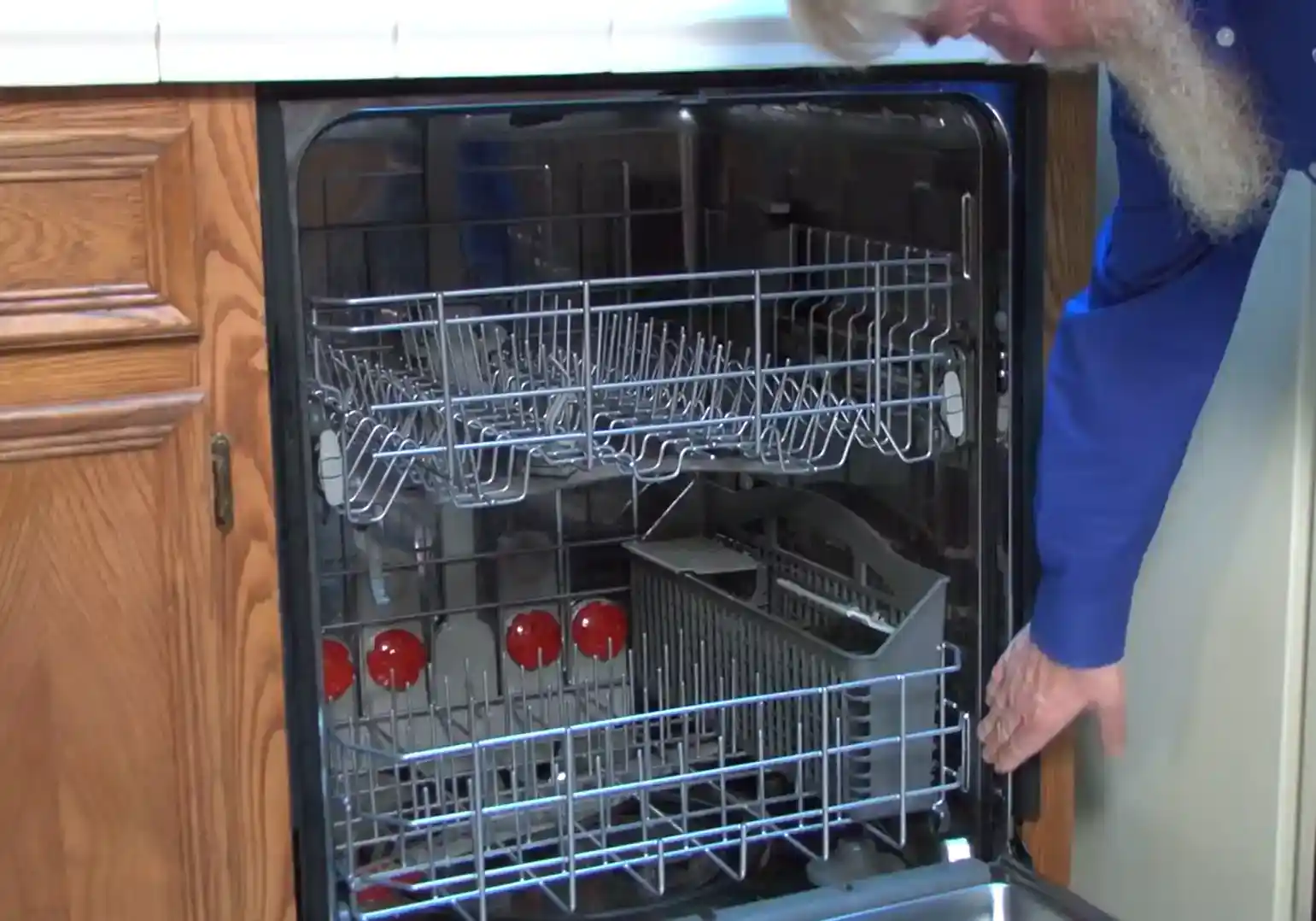
A dishwasher's water connections hide beneath its front kick panel and behind its cabinet neighbors. The supply line and its angle stop under the adjacent sink weep like any supply connection. The drain hose loops to the disposal or sink drain and leaks at its clamps. Door gaskets and detergent misuse produce the visible sudsy escapes, but the connection leaks are the ones that rot cabinet toe-kicks silently for months.
Diagnosis runs the machine through a full cycle with the kick panel off and the under-sink connections observed, catching fill leaks, wash splashes, and drain-cycle weeps in their own phases.
Refrigerators, Ice Makers, and the Quarter-Inch Line
The refrigerator's ice and water line is the smallest supply in the house and a steady producer of floor damage. Quarter-inch tubing, often plastic, runs from a saddle valve or stop behind the fridge, gets crushed when the appliance slides back, and pinholes with age. The leak is slow, hidden under and behind the unit, and found only when flooring buckles.
The fix is modern parts: a proper quarter-turn stop, copper or braided line, and a run protected from the appliance's own wheels. Homes as far as our Pasadena service edge and every kitchen in between carry this quiet little line, and it deserves a look whenever the fridge moves.
The Hour of Prevention That Beats the Claim
Appliance water safety fits into one short visit. Hoses get graded and dated, tired rubber swaps to braided steel, valves get turned and replaced if seized, drain hookups get secured, and the stops under the sink get proven working. It bundles naturally with any other plumbing call, and it is the rare service that clearly prevents five-figure damage for double-digit parts.
Ask for the appliance connection check by name at (626) 898-6169. If a hose has already let go, act in order: washer valves or house main off, breaker for the room off if water reached outlets, then (626) 898-6169 as an emergency call.
Braided hoses and working valves: the cheapest flood insurance ever sold.
✆ (626) 898-6169Appliance Water Connection Questions
How often should washing machine hoses be replaced?
Rubber hoses: every five years, dated with a marker at installation so nobody has to guess. Braided stainless: inspect at five, replace by ten, sooner if any bulge, rust, or crimp corrosion shows. If you cannot remember installing the current pair, they are due by definition. The swap takes minutes and removes the single biggest burst risk in the house.
Should I turn off washer valves between loads?
It is the textbook advice and genuinely effective, since an unpressurized hose cannot burst. Realistically, few households keep the habit. The practical middle ground is braided hoses, healthy quarter-turn valves that actually close, and a leak alarm or auto-shutoff valve behind the machine for homes that travel.
My dishwasher leaves a small puddle at one corner sometimes. Serious?
Intermittent corner puddles usually mean a door gasket section, a spray arm splash pattern, or a drain-phase weep at a clamp, and the full-cycle observation sorts which. Small is the right time to act: the same puddle soaking a toe-kick weekly is how cabinet floors rot. Book the cycle test at (626) 898-6169 and get it named.