Wall Leaks · Thermal First · El Monte & Pasadena, CA
Wall Leak Detection & Repair in El Monte & Pasadena, CA
A wall reports its leaks in temperature long before it reports them in color. Wet drywall reads cooler than dry, a hot-side leak paints a warm stripe up the cavity, and both show on a thermal camera while the paint still looks perfect. By the time a stain appears, the wall has been wet for weeks.
What Lives Inside Your Walls
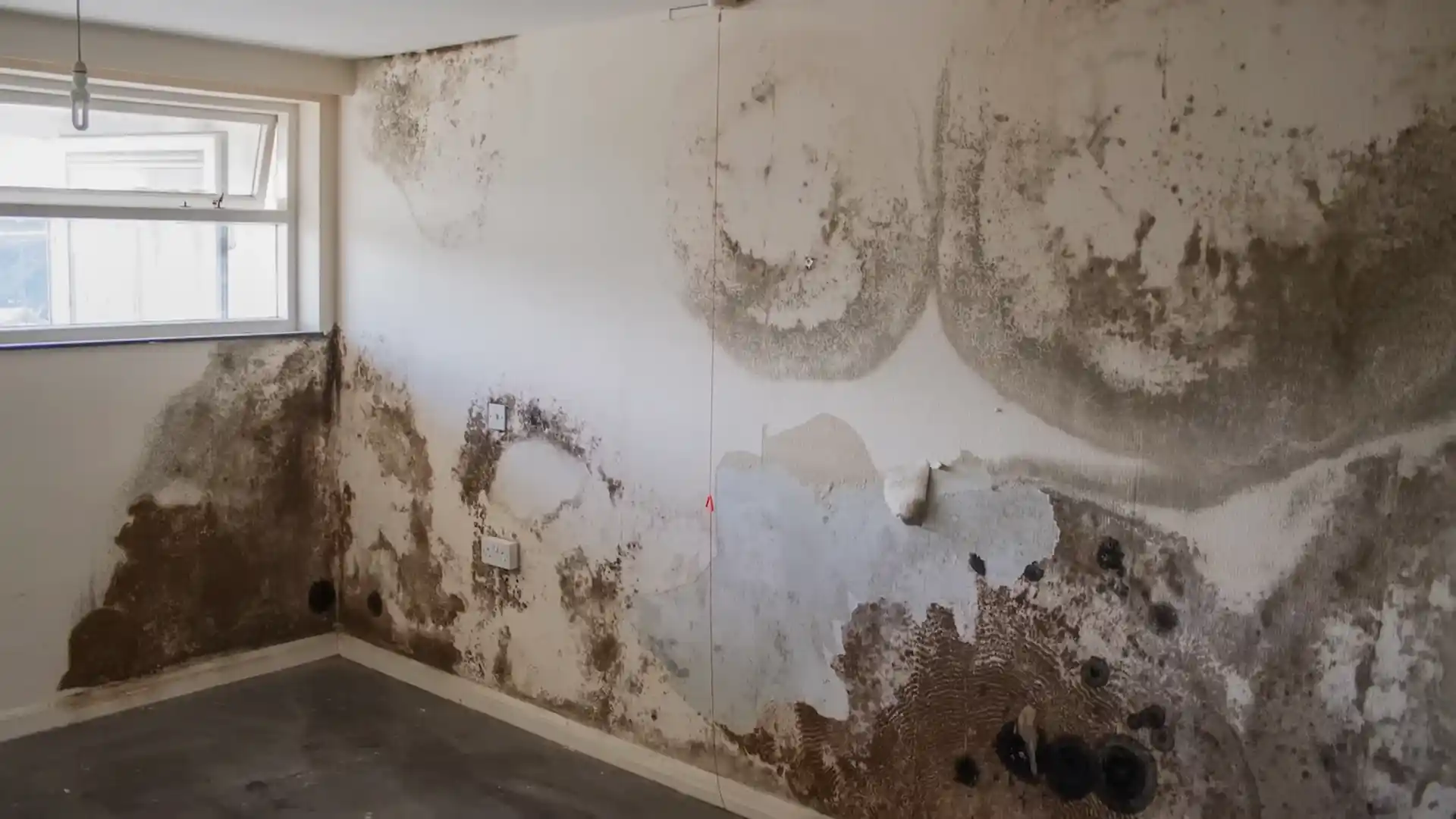
A typical interior wall carries more plumbing than its owner suspects. Supply risers feed fixtures above or beyond it. Drain and vent stacks head for the roof. Washer boxes and hose bib feeds punch through it, and in repiped homes, newer lines take shortcuts between rooms. Any of them can fail inside the cavity, and the cavity keeps the secret while insulation and framing soak.
The failures split the usual way. Pressurized lines leak constantly and show on the meter. Drains leak on use and do not. That single distinction, established in minutes, halves the suspect list before any scanning begins.
Scan, Meter, Listen, Mark
The wall diagnostic runs in four moves. The thermal camera sweeps the suspect walls and flags temperature anomalies: cool wet zones, warm hot-line stripes. The moisture meter confirms which spots are actually wet rather than drafts or ducts. Acoustic listening then checks pressurized candidates for the hiss of escaping water. The result is a marked rectangle, usually smaller than a sheet of paper, where the wall will open.
One opening at a proven spot is the entire economy of this service. The alternative, exploratory holes at every stain and hunch, costs more in patching than the plumbing repair itself.
Stucco, Siding, and the Exterior Wall Problem
El Monte's housing is overwhelmingly stucco outside, and stucco changes the physics. A leak in an outside wall can wick into the stucco instead of staining interior paint. It surfaces as white crust, bubbling paint outside, a damp patch at the base of a wall, or nothing visible at all. Hose bib penetrations and exterior-wall bathroom plumbing are the recurring offenders.
Scanning works here too, from inside, outside, or both, and it routinely finds exterior-wall leaks that interior inspection missed entirely. Homes in San Gabriel and across the older valley stock, where original hose bibs punch through original stucco, are classic candidates.
The Mold Clock Starts Early
A wall cavity is a mold farm: dark, still, full of paper and wood, and once a leak starts, wet. Growth begins within days of saturation, well before any visible sign reaches the room. This is the argument against the wait-and-see approach to a suspicious wall. The plumbing repair costs the same this week as next month, but the remediation bill grows with every wet day.
Often the source turns out to be a weeping copper pinhole, the most common wall-cavity culprit in this city's older stock. The repair and the bigger copper picture then continue under pinhole leak service, with the wall access already made.
Openings That Close Cleanly
Because access happens at one marked spot, closure stays simple. The cavity dries, with meter readings to prove it. The repair gets pressure-tested in the open wall. Then the rectangle patches with a square-cut piece that a painter, or we, can finish invisibly. You get photos of the failure, the fix, and the dry readings for your file.
If a wall in your home reads warm to the hand, sounds faintly of running water at night, or has paint starting to bubble, the scan takes under an hour. Book it at (626) 898-6169. Active water at an electrical outlet or switch is the exception that skips the queue: breaker off, then (626) 898-6169 as an emergency.
The camera sees through the paint. One scan, one mark, one small opening.
✆ (626) 898-6169Wall Cavity Questions From El Monte Homes
A wall in my hallway feels warm. What does that mean?
A persistent warm patch on an interior wall is the signature of a hot-side leak: a hot water line in the cavity or under the adjacent slab losing water and heating the material around it. It often comes with a water heater that cycles more than usual. A thermal scan confirms it quickly, and the warm patch itself usually marks the neighborhood of the failure.
Can you check a wall without cutting into it at all?
Yes, and that is the default. Thermal imaging, moisture metering, and acoustic listening all work through intact drywall and stucco, and together they either clear the wall or mark the failure. Cutting happens once, after the mark, for the repair itself. Scans that clear a suspicious wall are a common and happy outcome.
How do I tell wall moisture from a roof or window problem?
Timing and pattern. Plumbing moisture ignores weather and tracks water use; roof and window intrusion tracks rain and appears at tops of walls or below sills. The scan maps where the moisture actually enters, which settles it. Bring your observations about when the patch grows to (626) 898-6169 and the visit starts with the right hypothesis.