
Spas & Hot Tubs · Heat-Cycle Leaks · El Monte
Hot Tub & Spa Leak Detection & Repair in El Monte & Pasadena, CA
Heat is what separates spa leaks from every other water leak. A spa cycles from warm to hot and back thousands of times, and every gasket, union, and glued joint in it expands and contracts along for the ride. Parts that would last decades in a cold system fatigue in years. When a spa starts losing water, the heat history is usually why.
What Thermal Cycling Does to Spa Parts
Every heat cycle works the system. Pump unions loosen a fraction as their O-rings compress and relax. Heater manifold gaskets take the steepest temperature swings in the whole circuit and harden first. Glued joints in flex PVC, the corrugated pipe snaking under most spa shells, creep at the glue line. Jet bodies sealed into the shell flex against their gaskets with every soak.
None of these parts fails loudly. They weep, a drop per cycle, into the cabinet or the ground under the shell, and the water level does the arithmetic for you over weeks.
Portable Spa or Inground Spa: Two Different Hunts
A portable hot tub keeps its plumbing inside its own cabinet, which makes the hunt intimate. Panels come off. The equipment bay gets inspected dry, then watched during a heated run, and the drip announces its address. Foam-filled cabinets complicate it, since the foam soaks and hides the path, and finding the true source means excavating foam methodically rather than guessing.
An inground spa buries its plumbing like a pool does, often sharing trenches and an equipment pad with one. There the hunt is pressure testing by line, with spa-side circuits isolated and charged. The approach on our inground pool page applies, with spa twists: blower lines that must stay dry, and jet loops with more joints per foot than any pool line.
The Shared-Pad Problem
Most El Monte spas share equipment with a pool, and shared pads breed misattribution. A pool can lose water through a spa-side check valve. A spa can drain back into the pool circuit overnight through a failed valve. A shared filter loop can weep at one union. All three produce confusing symptoms that get blamed on the wrong vessel.
The sort is procedural: isolate the two bodies of water with their valves, mark both levels, and let a day of separation testify. Which vessel drops, and whether the drop changes with equipment running, assigns the blame correctly before any repair money moves. The general loss triage on the pool leak page pairs with this on combined systems.
Shell Fittings, Lights, and the Waterline
The spa shell itself leaks at its penetrations rather than its surface. Jet bodies, suction fittings, the light niche, and the skimmer throat all pass through the shell on gaskets, and each gasket lives half in hot water. Dye testing at each penetration with the water calm reads the truth: dye pulling toward a fitting names it.
Waterline behavior helps too. A spa that always stabilizes at the same level has a breach at that elevation, frequently a jet body or the light. One that drains to the footwell implicates the floor suction or a low line, a bigger conversation and a rarer one.
Repairs That Respect the Heat
Spa repairs done right use parts rated for the environment: high-temperature gaskets at the heater, unions torqued to spec rather than muscled, flex PVC replaced with proper spa hose and cement, not irrigation-grade shortcuts. The wrong material survives the pressure test and fails the first month of heat cycles, which is why spas attract repeat-repair stories.
Owners around Granada Park and across the city run spas of every age, and the pattern holds for all of them. A correct repair with rated parts ends the story. A generic one schedules a sequel. Get the correct version by describing your spa and its symptoms to (626) 898-6169. A spa cabinet with active spray inside it earns the fast version: power off at the breaker, then (626) 898-6169.
Thousands of heat cycles wrote this leak. One correct repair closes the book.
✆ (626) 898-6169Spa and Hot Tub Questions From El Monte
My hot tub loses about an inch a week. Is that evaporation?
Heated water evaporates aggressively, so some loss is honest, especially uncovered. The control is a covered test: keep the cover on, jets off, for two days and compare the drop to a covered bucket of spa water sitting on the step. Loss beyond the bucket's is a leak. Heavy evaporation is also a cover-condition message worth hearing.
Water pools under my portable spa cabinet. Where do I start?
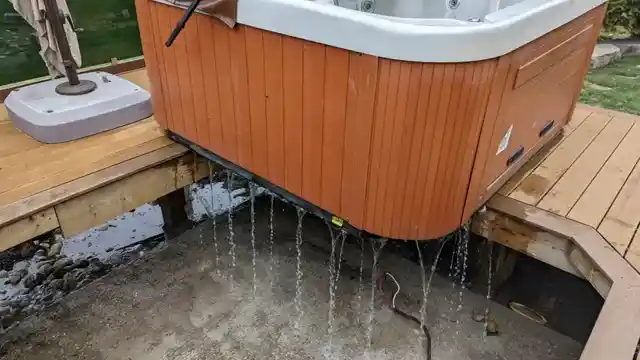
Start by not running it dry: check the water level and keep it above the skimmer. Then kill power and open the equipment side panel; most cabinet leaks live at the pump unions, heater manifold, or a nearby glued joint, and a flashlight during a refill often shows the drip. Foam-filled cabinets are harder, and that is where the methodical hunt earns its fee.
The spa drains down overnight but the pool stays full. What gives?
On a shared system, that pattern usually means the spa is bleeding back into the pool through a failed check valve or a spillover set wrong, or a spa-side line below waterline has a breach. The isolation test with both vessels valved apart sorts it in a day. Describe your plumbing layout to (626) 898-6169 and the test gets set up on the first visit.