Electronic Method · Line Tracing · El Monte & Pasadena, CA
Electronic Leak Detection in El Monte & Pasadena, CA
You cannot listen along a pipe you cannot find. In a city of unrecorded remodels and sixty-year-old tract plumbing, nobody actually knows where the lines run. Electronic detection solves the map problem: a signal placed on the pipe, a receiver reading it from above, and the true route drawn on your floor or lawn.
The Map Problem Nobody Budgets For
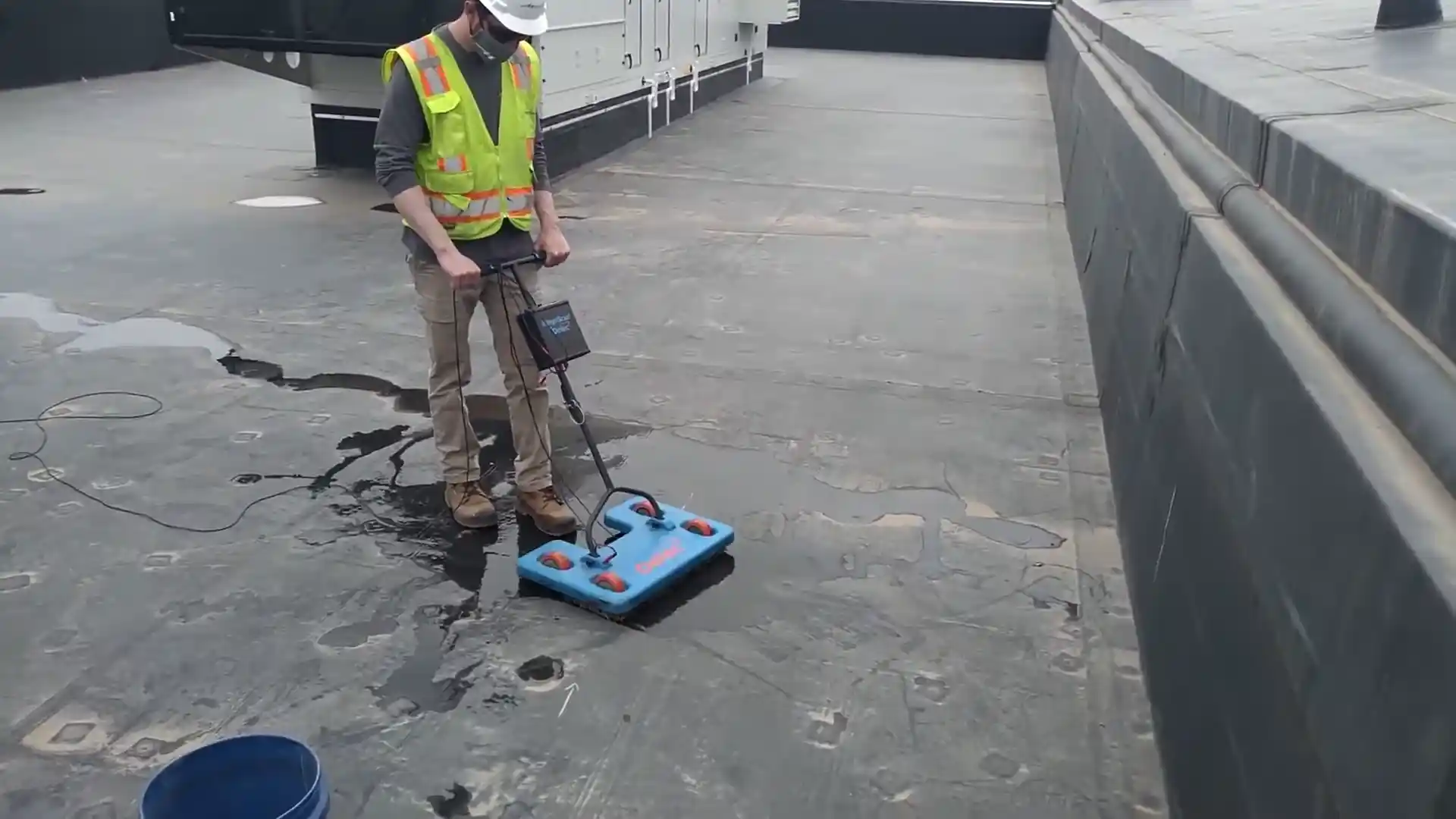
Ask ten El Monte homeowners where their water line runs and nine will point at a straight path from meter to house. The pipe disagrees. The first crews routed around rocks and trees that are long gone. Remodels moved things. Slab-era plumbers ran lines wherever the pour schedule favored. Every locating job that skips the map step gambles its accuracy on a guess.
Electronic tracing removes the gamble. Before anyone listens, digs, or scans, the actual route goes down in paint, and every later step happens on the pipe instead of near it.
How a Signal Finds a Pipe
The transmitter puts a signal onto the line in one of three ways. A direct clamp works where metal is exposed. Induction through the ground works where it is not. And a sonde, a small beacon pushed through the pipe itself, works from the inside. The signal radiates from the pipe, and the receiver above reads its strength and geometry, letting the operator walk the line and log depth as they go.
Metal pipe carries signal beautifully end to end. Plastic carries none, which is where the sonde earns its place: it travels inside the pipe and broadcasts its own position, turning even PVC into a traceable route one push at a time.
Tracing Plus Listening: The Standard Pairing
Electronic work rarely finishes a locate alone; it aims the tool that does. With the route painted, acoustic listening proceeds in a narrow corridor instead of a whole yard, correlation sensors sit on known points of the same line, and every reading gains meaning from position. The pairing is standard on service main locates and on any buried line job where the route is not documented, which in this housing stock means nearly all of them.
The same map pays again at repair time. Excavation plans, trenchless assessments, and future work all inherit an accurate route drawing instead of folklore.
Depth, Congestion, and Honest Limits
Signal work has its own physics to respect. Depth readings blur where multiple utilities crowd a trench, since gas, water, and old irrigation can all sing back at once, and distinguishing them takes frequency discipline and experience. Signal bleeds onto neighboring metal through shared soil contact. And a badly corroded line can break the circuit mid-trace, which is itself diagnostic: the signal often dies near the very deterioration you are hunting.
Around West El Monte and the older streets, congested parkways are routine, and the discipline is the difference between a clean trace and a colorful guess.
A Note on Old Paint Marks
Found faded paint lines on your slab or lawn from a past job? Treat them as history, not truth. Marks fade, pipes get moved, and a line painted for one purpose gets trusted for another years later. A fresh trace costs little and takes an hour. Old paint has sent more than one shovel into the wrong soil, and the fix for that is simply to draw the map again before it matters.
When to Ask for This Method by Name
Request tracing whenever position is the question. Do it before any excavation. Do it before a driveway or addition pours over unknown lines. Do it when a locate elsewhere stalled because nobody could find the pipe, or when you simply want your property's pipe routes on paper while everything is calm. The survey is quick, the paint fades in weeks, and the drawing lasts as long as your files do.
It books like everything else, through (626) 898-6169, and it bundles naturally with a listening survey when a live leak is the reason you called. Pouring concrete soon over ground you have never mapped? Trace first, pour second: (626) 898-6169.
First the map, then the mark. Every accurate locate starts with the route.
✆ (626) 898-6169Line Tracing Questions From El Monte
Can you trace plastic pipe electronically?
Not by clamping signal onto it, since plastic conducts none. The sonde solves it: a transmitting beacon pushed through the pipe broadcasts its position, and the receiver follows it from above, mapping the route segment by segment. Metallic tracer wire buried with newer plastic lines, where installers included it, offers a second path.
How deep can line tracing read?
Typical residential lines at two to four feet trace cleanly with reliable depth estimates. Precision tapers as depth grows and as neighboring utilities crowd in, and readings in congested parkways get cross-checked from multiple positions. The operator states the confidence with the drawing, and low-confidence stretches get flagged rather than glossed.
Is this the same as calling 811 before digging?
No, and both have their place. The 811 service marks public utilities approaching your property and is legally required before excavation. It does not map your private lines past the meter, which is exactly what this service covers. Before any dig, do both: 811 for the public side, and (626) 898-6169 for everything the utility marks stop short of.